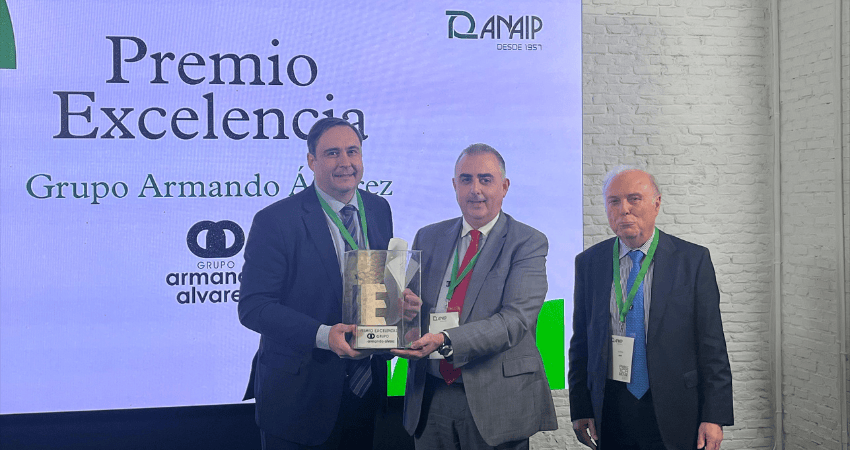
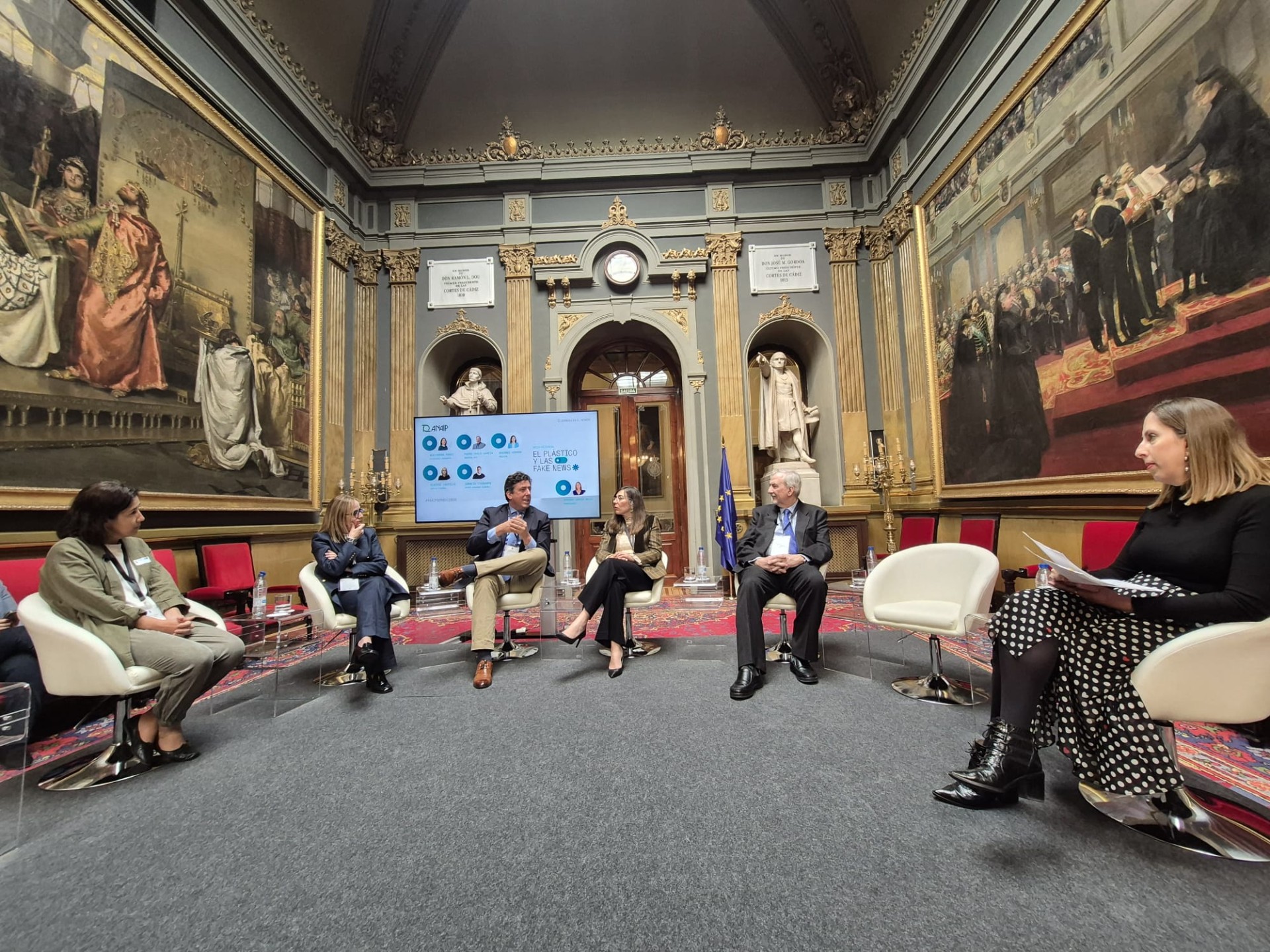
Grupo Armando Alvarez took part in the 2nd ANAIP Conference at the Senate, an event focused on the key challenges facing the industry under the title “Disinformation, regulation and competitiveness”.
The conference brought together plastics industry companies, ANAIP as the organising body, institutional representatives and media professionals, reflecting the sector’s joint commitment to addressing current challenges and advancing towards more rigorous, fact-based communication.
Two main areas were addressed: on the one hand, the relationship between regulation and competitiveness in the context of the new European Packaging and Packaging Waste Regulation (PPWR); and on the other, the role of communication in an environment shaped by immediacy and the simplification of public debate.
Representing the Group, Ignacio Echávarri, Business Director of the Industrial and Food Division, took part in the panel on communication and public narrative, focused on the role of information — and disinformation — in shaping the sector’s social perception.
Topics discussed included the simplification of debates in media and social networks, polarization, and the spread of decontextualized messages about plastics.
During his speech, Ignacio highlighted the sector’s evolution in recent years:
“The sector has changed far more than is perceived, but the best way to combat disinformation is to show, through facts, what is already being done”
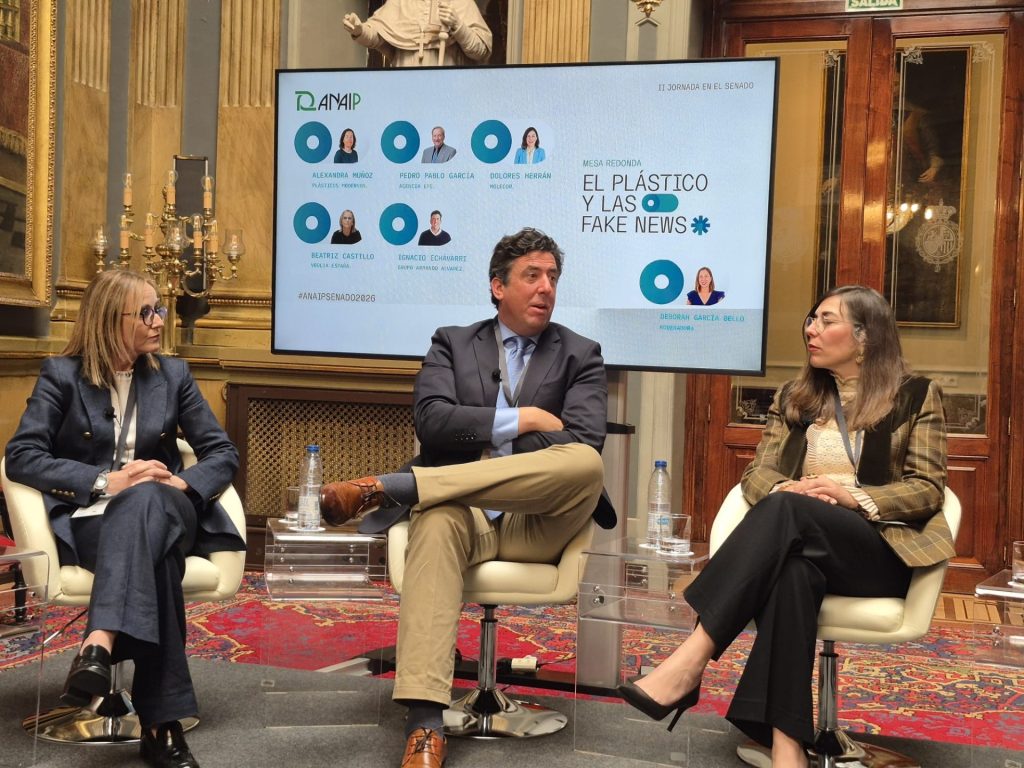
In this regard, he noted that the industry has been making progress for years in areas such as innovation, circularity and improved material efficiency. However, he stressed that the current challenge is not only to keep progressing, but also to better explain these advances, with transparency and based on facts.
He also underlined the importance of bringing industrial reality closer to society through initiatives that allow people to understand first-hand how the sector operates and what its commitments are.
One of the key messages shared during the conference was the need to strengthen education, the use of data and context in order to contribute to a more rigorous and constructive public debate.
In this regard, he noted that the industry has been making progress for years in areas such as innovation, circularity and improved material efficiency. However, he stressed that the current challenge is not only to keep progressing, but also to better explain these advances, with transparency and based on facts.
He also underlined the importance of bringing industrial reality closer to society through initiatives that allow people to understand first-hand how the sector operates and what its commitments are.
One of the key messages shared during the conference was the need to strengthen education, the use of data and context in order to contribute to a more rigorous and constructive public debate.